Build Charizard in Pokechill: Best Team, IVs & Evolution Plan
A practical Charizard build guide for Pokechill players who want a fire attacker that actually fits their team instead of draining resources too early.

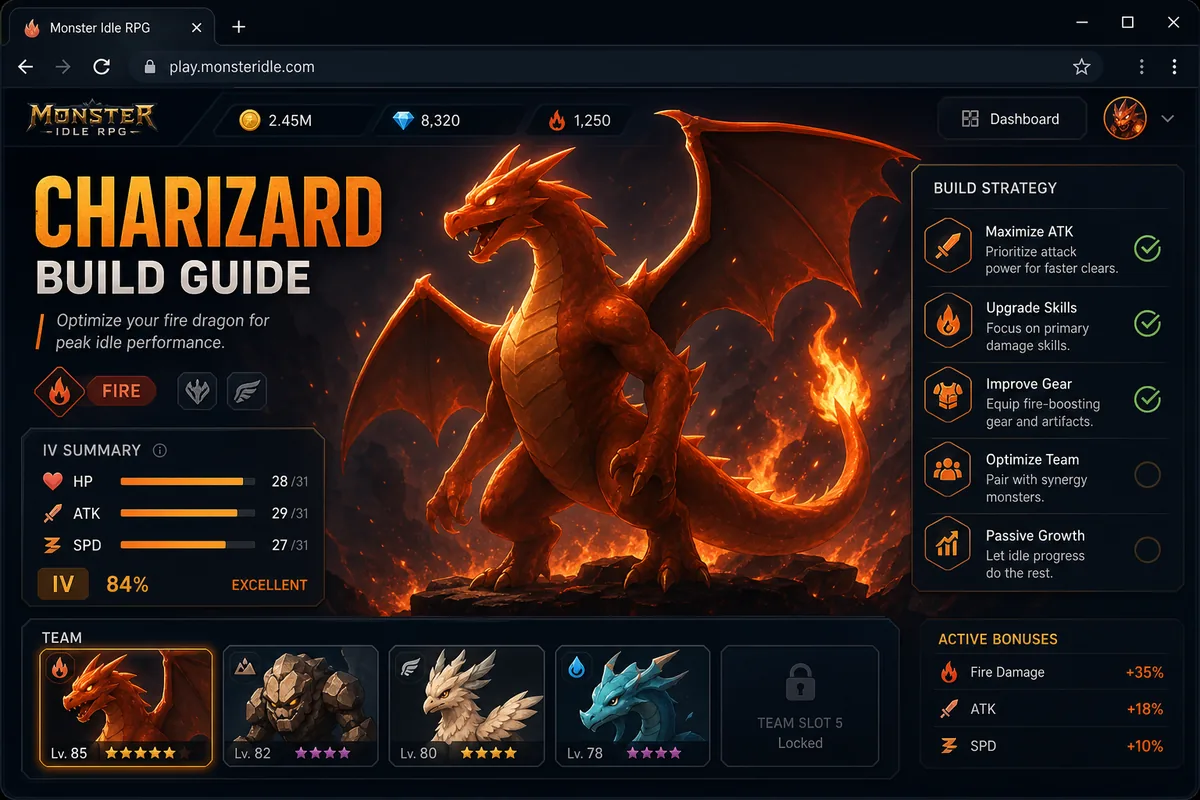
Recommended Charizard Build in Pokechill
Charizard is best used as a dedicated fire attacker. In Pokechill, that means you should judge the build by repeatable damage, matchup value, and how easily it fits beside your current carry. Do not build Charizard only because it is iconic. Build it when your account needs a strong fire slot that can clear Grass, Bug, Steel, or Ice-style matchups more efficiently.
The safest version is an offensive Charizard with Speed or special attack style priorities, depending on the move pool and in-game stat display you currently have available. If your game version shows a clear special attack stat, treat that as the main damage stat. If it only exposes broad attack values, choose the Charmander or Charmeleon with the best offensive IV spread and avoid over-investing before final evolution.
Charizard is not a universal tank. It usually performs best when it enters favorable matchups, clears waves quickly, and lets bulkier teammates handle bad defensive situations. Pair this page with the Pokechill Tier List when deciding whether Charizard deserves resources over your current S-tier or A-tier attackers.
Primary role
Fire damage dealer for favorable idle farming, boss cleanup, and type coverage.
Best IV focus
Offense first, Speed second, then enough HP or defense to avoid frequent fainting.
Best timing
Start serious investment after you confirm the final evolution path and compare IVs.
Avoid
Spending rare Genetics materials on a low-IV Charmander just because it is your first one.
Charmander to Charizard: Evolution Planning
The main build decision starts before Charizard appears. If you catch multiple Charmander, compare them first. A later Charmander with better offensive IVs can be a better long-term host than the first one you level. Pokechill rewards patience because Genetics and IV planning can turn a good species into a much stronger account piece.
Use the Pokechill Evolution Chart for exact level planning and to confirm current evolution requirements. This page focuses on build decisions: what to keep, when to invest, and how to avoid locking resources into the wrong host.
| Stage | Build Role | Best Action |
|---|---|---|
| Charmander | Candidate check | Compare IVs, nature-like bonuses if shown, and whether the account already needs fire coverage. |
| Charmeleon | Trial attacker | Test damage in current zones before spending rare upgrades or Genetics resources. |
| Charizard | Main fire carry | Commit upgrades only when the final form fills a real team slot and has acceptable IVs. |
Best Stats and IV Priorities for Charizard
For most players, the correct IV order is offense, Speed, then survivability. Offense makes every favorable matchup faster. Speed helps Charizard act before enemies in many idle battle loops. HP and defensive IVs matter because a fragile attacker loses value if it faints before its damage matters.
Do not chase perfect IVs too early. A good Charizard with strong offensive values is often enough for mid-game progression. Save the perfection chase for late game, when you understand Genetics costs, team role, and whether Charizard remains part of your long-term lineup.
If you find a shiny Charmander or Charizard, check the Pokechill Shiny Guide before evolving or merging traits. Shiny status can change the investment decision, but bad IVs still need a Genetics plan.
Priority rule
Choose the Charizard candidate that improves your actual team. A slightly imperfect offensive IV spread is usually better than a prettier catch that does not survive or lacks a role.
Moves, Abilities, and Item Priorities
Move and ability names can change as Pokechill updates, so build by function rather than memorizing a single fixed loadout. Look for reliable fire damage first, then coverage, then uptime.
| Slot | Priority | Why It Matters |
|---|---|---|
| Main attack | Reliable fire damage | This is the reason to use Charizard over a neutral attacker. |
| Coverage move | Answer Water, Rock, or resistant targets | Coverage prevents Charizard from becoming useless in bad zones. |
| Ability or passive | Damage, Speed, or burn-style pressure | Passive value matters in idle battles because it repeats without manual play. |
| Held item | Fire boost or offensive consistency | Use a damage item when Charizard survives; use bulk only if fainting blocks progress. |
If your current version shows Charcoal or another fire-boosting item, test it against a neutral offensive item. Keep the one that improves actual clear speed in your current farming zone.
Best Team Comps Around Charizard
A good Charizard team is built around what Charizard does not want to fight. Cover its bad matchups first, then add utility that keeps idle progress stable.
Balanced progression team
Use Charizard as the fire slot, a Water or Grass partner for Rock and Ground pressure, and one bulky neutral Pokemon that can absorb awkward matchups. This is the safest setup for players still unlocking zones.
Fast farming team
Use Charizard with other high-damage attackers when the zone favors fire or neutral damage. This setup works best when enemies do not punish Charizard defensively and you want faster idle clears.
Genetics investment team
Keep Charizard as the target host only if it remains useful after IV transfers. If another Pokemon becomes the better long-term carry, Charizard may still serve as a coverage attacker rather than your main resource sink.
Common Charizard Build Mistakes
1. Building the first Charmander immediately
The first copy is not always the best host. Compare IVs before committing permanent upgrades.
2. Ignoring weaknesses
Charizard can feel strong in good matchups and weak in bad ones. Add teammates that cover Water, Rock, Electric, and bulky neutral enemies.
3. Treating tier rank as the whole answer
A tier list tells you relative value, but your account needs decide whether Charizard is worth resources right now.
4. Spending Genetics without a target
Decide whether Charizard is the host, the sample, or just a temporary attacker before using rare transfer materials.
Step-by-Step Charizard Upgrade Plan
- Catch or obtain multiple candidates. Do not judge the build from one low-IV Charmander.
- Compare offensive IVs first. Choose the candidate that will deal reliable damage after evolution.
- Test before heavy spending. Use Charmeleon or early Charizard in real zones before committing rare items.
- Add coverage teammates. Cover bad defensive matchups before blaming Charizard for inconsistent performance.
- Use Genetics late, not blindly. Only transfer traits when Charizard is clearly part of the final team plan.
Sources and Version Notes
This build guide uses the current Pokechill site resources, including the Pokechill Guide, Wiki, Evolution Chart, Tier List, and Shiny Guide. It is written for Pokechill players searching for Charizard build decisions rather than a generic Pokemon moveset.
For broad franchise context on Charizard's fire/flying identity, you can compare with public reference pages such as Bulbapedia's Charizard entry. Always trust current in-game Pokechill tooltips over external franchise assumptions when mechanics differ.
Frequently Asked Questions
Last updated: May 23, 2026